
Trending
In many deals, the play of the cards is fairly automatic, and both sides manage to achieve par. But in some deals, the so-called par result is not achieved because one side unwittingly strays from the beaten path and eventually comes to grief.
In most such deals, the error becomes obvious once the deed is done, and it is quietly stored away by the offender in the deep recesses of his memory. But every once in a while, the error is not glaring, and the players go merrily on to the next deal, blissfully unaware of any wrongdoing by anybody.
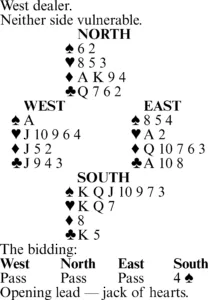
Consider this case where South opened the bidding in fourth seat with four spades and West led a heart. East won with the ace and returned the deuce to South's king.
Declarer was aware of the danger of a heart ruff, so he tried to draw the opposing trumps as quickly as possible by leading a spade at trick three. But West won with the ace and led a third round of hearts. East ruffed declarer's queen and cashed the ace of clubs to set the contract.
This was not a par result. Despite the perfect defense by East-West, declarer should have made the contract. Instead of leading a trump at trick three, South should have cashed dummy's A-K of diamonds and discarded his queen of hearts, which was much too hot a potato to keep in his hand.
Having performed this maneuver in the interests of safety, declarer could then have led a trump with complete impunity. With the queen of hearts having flown the coop, no return by West could harm the contract.
There are times when it is just as important to discard a winner as a loser.
Tomorrow: Test your play,