
Trending
There are hands where declarer seemingly has no choice but to hope for a 3-3 split in a key suit. But because that division occurs only 36% of the time, he should not accept these odds without first looking for a way to improve on them.
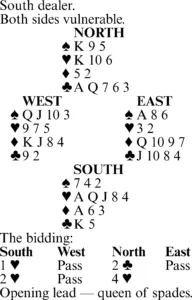
South failed to make that effort on this deal. He played low from dummy on West's first two spade leads, hoping East had started with the singleton or doubleton ace, but East took his ace on the third round and shifted to a diamond.
South won with the ace and cashed all five of his trumps, hoping for a 3-3 club division or a discarding error by the opponents. But East retained all of his clubs, and declarer eventually lost a diamond trick to go down one.
South could have improved his chances considerably had he taken steps to guard against a 4-2 club break. After winning the diamond return, he should cash the A-K of trump and K-A of clubs and then ruff a small club high to prevent a possible overruff by West. South next crosses to the ten of hearts, simultaneously drawing West's last trump, and cashes the Q-7 of clubs to make the contract.
Note the importance of ruffing the third round of clubs instead of trying to cash the queen first. This protects against the possibility of either defender having started with a doubleton club and three trumps, as in the actual deal.
It is true that if the opposing clubs are divided 3-3, this extra effort turns out to be unnecessary. But if the clubs are 4-2 -- a division that occurs 48% of the time -- declarer can raise his total chance of success to 84% (once trumps have divided 3-2) by adopting the recommended line of play.
Tomorrow: Extra chance.
(c)2026 King Features Syndicate Inc.