
Summer bagworms hide in plain sight
Trending
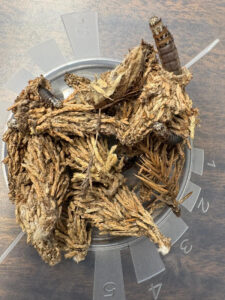
Bill and I stopped to wash the car, when I noticed some junipers full of bagworms. Many mistake them for pine cones, but they're actually a type of moth (Thyridopteryx ephemeraeformis) that plagues many conifers, trees and shrubs. Larvae appear in May and June, from the bag where the eggs overwintered, to feed. They attach themselves to the plant by a thread and build conical bags, looking like an upside down ice cream cone, built of plant debris.
They eat the new growth of the host plant, molt as instar stages and enlarge their bags. After four or more molts, they are up to an inch long. Then as fall comes, they gorge themselves, close the end of the bag and pupate for four weeks; then males transform into clear-winged moths.
They have black hairy bodies. The females stay maggot-like, in the bags. Males come to the bags to mate, and 500 to 1,000 eggs are produced. These eggs overwinter, then spring brings a new brood.
The chewing mouthparts can decimate small trees and shrubs, but to conifers, it can be devastating.
They first eat the new tender leaves and needles, then they graduate to the tougher vascular tissue. Unfortunately, many conifers do not grow new needles or leaf parts, so the tree may not recover.
The bag is easy to identify, made up of leaf litter, sticks and has a characteristic oval shape up to 2 inches long. Many times their presence is not detected until either the bags or extensive stripping is noted.
Some birds will tear the bags and prey on the worms. Some wasps and parasitoids will prey on them. Insecticides can be applied in May or June to kill the emerging worms; the bags can be simply picked off and put in hot soapy water, or they can be smashed.
As you walk in your yard, it is a good idea to look at your plants. Inspect them for problems and issues, so they cannot take over.