

TO YOUR GOOD HEALTH: He’s still constipated months past operation
DEAR DR. ROACH: I’m a 66-year-old male in good health. I’ve always had very regular bowel movements, usually spending less than 5 minutes in the bathroom daily. About six months ago, I had a colonoscopy. Since then, I’ve been constipated with very hard stools. My doctor recommended fiber supplements three times a day and Colace. I’ve been doing this for four months without relief. My diet hasn’t changed in the past year. I drink more than the recommended amount of water and exercise daily. What can I do to get back to normal?
• B.L.
ANSWER: Constipation for a few days after a colonoscopy is expected. The bowel preparation for a colonoscopy removes more than 99.9% of your colon bacteria, and the entire suite of microbes that help your bowel stay healthy need to replenish. I agree with your doctor’s management for the short-term future. I’d also have considered polyethylene glycol (MiraLAX).
Since your microbiome is strongly related to what you eat, I’d have expected your bowel function to have returned to normal long ago. A trial of probiotics might be worthwhile, with supplements that contain multiple species of healthy bacteria having better data to prove their effectiveness.
If this doesn’t help, it’s time to think about what else might be going on. Medications are a common cause of constipation; antidepressants, some blood pressure medicines (especially calcium channel blockers like verapamil), bladder medicines, and calcium supplements are the most usual agents. Blood tests to look for thyroid disease, high calcium and other problems are warranted here.
DEAR DR. ROACH: What can I do to make my life easier when my test results show a completely torn biceps tendon? In addition, I have two important shoulder tendons that are torn, wear and tear damage to my bones, and muscles that have weakened and shrunk.
T.H.
ANSWER: The biceps muscle has two distinct heads (“biceps” literally means “two heads”) — the short head and the long head. Most biceps tendon ruptures are of the long head, and these ruptures are often managed conservatively (without surgery).
With time and critical physical therapy, the short head of the biceps can take over much of the job that the long head did, although there will always be some loss of strength. Even complete tears of the short head are usually managed without surgery and with physical therapy.
Pulmonary fibrosis can make surgery much more dangerous, so this may be an additional reason that your doctor recommended against surgery.
ToYourGoodHealth@med.cornell.edu
Lifestyles
Religion news
SERBIAN DAY: The 93rd annual Serbian Day will take place noon to 8 p.m. Sunday at Holy Trinity Serbian Orthodox ...
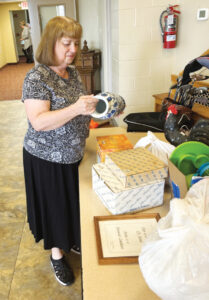
Trash and treasure sale to raise funds for church capital campaign
Storm scam: Don’t get swept away
Valley residents experienced a taste of natural disasters earlier this month, as a powerful storm plowed through ...
Senior news
RETIREES TO MEET: Howland Schools Retired Personnel will meet for lunch at 11:30 a.m. Aug. 4, at Shepherd of the ...
Unexpected hazard on the highways
For thousands of years, humans lived with minimal exposure to manmade chemicals. Today, though, we are surrounded ...
HINTS FROM HELOISE: How you can keep your skin healthy
DEAR HELOISE: Every skin care company claims to have the perfect solution to staying young, but the truth is that ...