Why oaks are so important
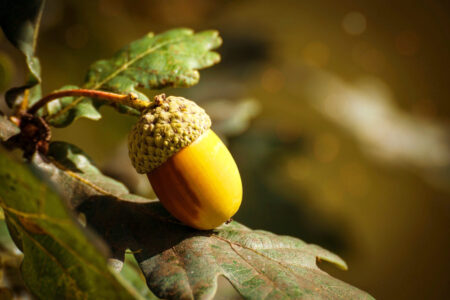
Submitted photo Acorns begin as spring flowers that are wind pollinated and fertilized, then develop into acorns that mature by late summer or fall, depending on the species.
The Roman arch was held together and anchored by a wedge-shaped stone in the center of it. This stone added stability to every stone that made up the arch, and thus this term is synonymous with this stability, the keystone.
A keystone species in nature has “a disproportionately large effect on the natural environment.” This species holds an ecosystem together by building and enriching that environment. It is vital with unique characteristics playing roles in the health and maintenance of that habitat.
Even in small numbers these species have major impacts on health, maintenance, balance, dynamics, diversity, as well as the enrichment and resilience of the ecosystem. Oaks are such keystone species. They support more lifeforms than any other trees in North America.
First, they make acorns. These begin as spring flowers that are wind pollinated and fertilized, then develop into acorns that mature by late summer or fall, depending on the species. Some are made every year, others every other year, which will be talked about later. The mast, or harvest, feeds insects, larvae, spiders, butterfly and moth caterpillars, birds, mice, voles, squirrels, rabbits, opossums, foxes, wild hogs, wild turkeys, quail, ducks, crows, jays, white-tailed deer, and black bears.
Oaks, or Quercus genus, are divided into white and red species. White oaks produce acorns in one growing season, and their acorns germinate soon after falling; red oaks take two years to mature acorns and produce large crops irregularly. Their acorns are higher in tannins, making them more bitter and less digestible, and they remain dormant longer on the ground, providing a more extended food source for wildlife.
Oak seedlings invest heavily in root growth early, especially when conditions like light and moisture are favorable. Keeping the sprout in sunlight allows the oak to grow into a great canopy, ensuring a vast root system that supports mycorrhizal (fungi) networks. This allows oaks to store large amounts of carbon (several tons in each tree), locking it up for up to hundreds of years.
They also remove pollutants from the environment. These roots also prevent erosion.
Oaks block wind, cool buildings by shade and transpiration. Oaks are homes for birds, insects, wildlife, and can be hybridized to add new variety to the landscape. They also produce leaves, twigs, and new growth as browse for animals. As the leaves fall in the autumn, they offer cover for small invertebrates and mammals.
So, as this article has told you, why are oaks so important? Another way to put it is how can we not have oaks?
Lifestyles
Why oaks are so important
HINTS FROM HELOISE: Always send thank-you note for gifts you receive
DEAR HELOISE: I cannot go without responding to Bob, in Santa Ana, California, who said that not thanking someone ...
Valley Grows Calendar
Here are upcoming gardening events through the Ohio State University Extension Office. For more information and a ...
DEAR ANNIE: Carrying weight of a one-sided friendship
DEAR ANNIE: I am writing about a friendship that has weighed on my heart for quite some time. I have known this ...

Monday evening TV listings