

TO YOUR GOOD HEALTH: Side with caution on getting vaccine
DEAR DR. ROACH: I have a question about possibly getting a measles vaccine at the age of 67. I do not recall ever getting measles. But I am the youngest of four, so it is likely that I was exposed through them. I happen to have my vaccination records as a child, and it does not show any inoculation for the MMR vaccine.
The last recorded vaccination was in 1967 after the introduction of this vaccine, which I believe was in 1963. Can I assume that I wasn’t given it because I had already had the disease? Or should I play it safe and get the vaccine now? I currently live in Florida, where we are in the middle of two outbreak areas.
• L.P.
ANSWER: You were born in 1958 or 1959. You are right that the vaccine was introduced in 1963, and without proof that you’ve gotten it, I would say that you’re considered to be possibly susceptible. You are quite right that you might have also had the disease; however, in an outbreak setting, it is prudent to be sure that you are immune as getting measles at the age of 67 is dangerous, with about a third of people requiring hospitalization.
There is no effective treatment for measles, and the best we can do is support someone and hope. In my opinion, the best option is to get tested for immunity. Your regular doctor can do this by checking your antibody level. If you are immune, there is no need for the vaccine.
I agree it’s likely that you are immune given your family situation. However, if the blood test is negative, then I recommend two doses of the vaccine, separated by at least 28 days.
People who do not live in an area of an outbreak do not need to get tested. Anyone who was born before 1957 can be considered immune.
DEAR DR. ROACH: In a recent column about osteoporosis, you said a hip fracture “is devastating.” I’ve heard this often, but honestly, I don’t really understand why this particular injury often leads to things going downhill. Could you elaborate?
• T.G.
ANSWER: A femoral neck fracture is the most common type of hip fracture in older adults. It is devastating because the statistics are grim: About 15% to 25% of people will die within one year, while the majority of survivors experience functional decline. Between 40% and 60% of people never regain the mobility they had before the fracture, and 10% to 20% require a nursing home within a year.
The numbers are grim to a large extent because many people who fracture their hip already have quite significant medical problems. A person who has good function before a hip fracture has a much better chance of doing well after getting surgery to fix the hip. Even so, it’s far better to prevent a fracture than to treat one.
Lifestyles
Like people, pain can be unique and rather complex
Pain is personal and highly subjective. An event that causes excruciating, intolerable agony for one person might ...
Senior news
PERI TO MEET: The Public Employee Retirees of Mahoning County Chapter 18 will meet at noon April 7 at Avion on the ...

How seniors can build their social networks in retirement

Seniors and dating
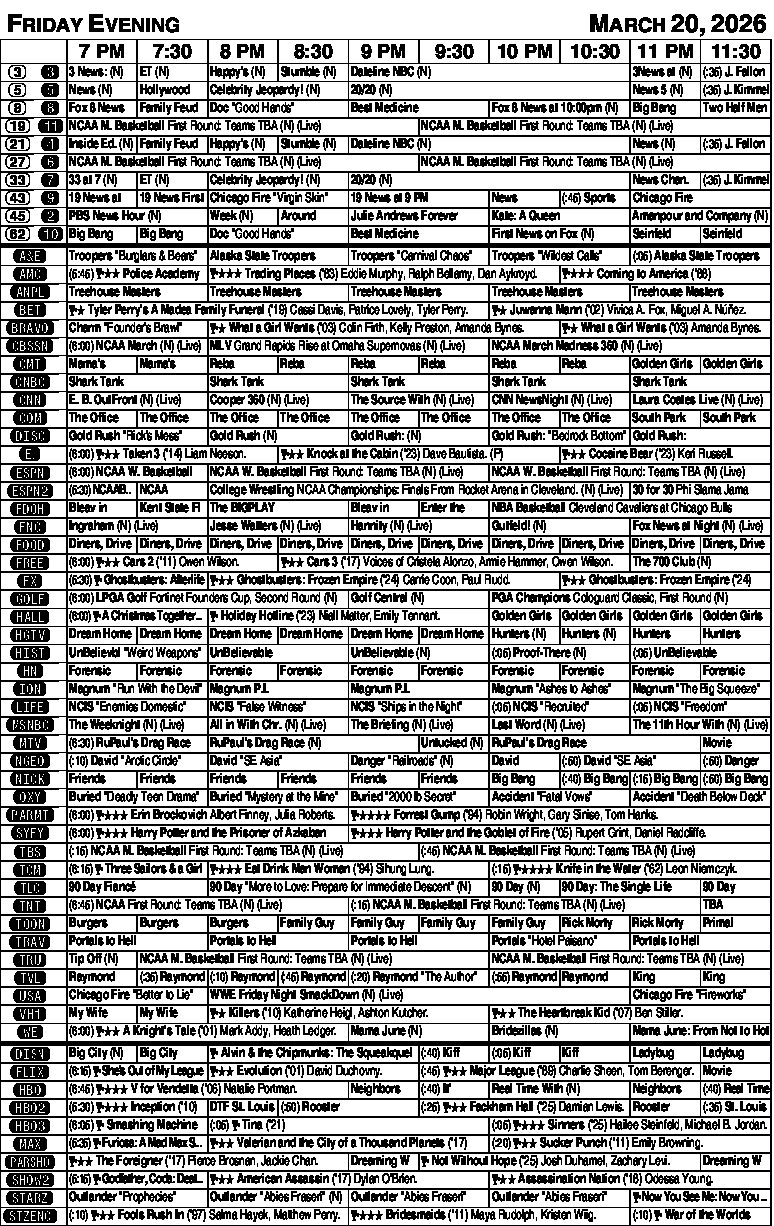
Friday evening TV listings
TO YOUR GOOD HEALTH: Side with caution on getting vaccine
DEAR DR. ROACH: I have a question about possibly getting a measles vaccine at the age of 67. I do not recall ever ...