

The tale of the bobcat
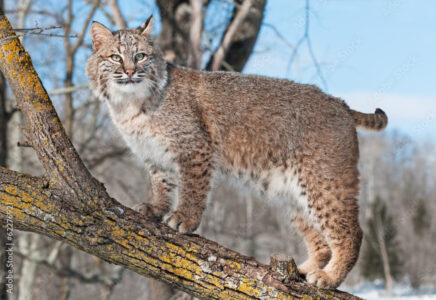
Submitted photo
Bobcat (Lynx rufus) populations have been increasing since their extirpation in the 1850s.
From the 1970s, the numbers have risen to a substantial population because of habitat availability, forests, open habitat and agricultural areas.
As of 2019, expansion of bobcats, from southeastern counties, as well as eastern counties, is looking like a comeback of these predators.
Forest cover corridors allow for movement to expand and settle into hospitable habitat for bobcats to thrive.
The Ohio River Valley is important to this movement as it allows bobcat movement into other states as they expand their territories.
These territories are for food as well as mating. Neither sex shares territories.
Adult bobcats may weigh between 9 and 40 pounds and resemble a large cat.
I have personally seen one, and I thought it was a cat until I saw the tail. That bob tail is a give away.
Bobcats’ diets are eating rabbits, rodents, birds, bats, deer, racoons, opossums, ground hogs, squirrels, wild turkeys and reptile eggs, as well as insects.
The bobcat is tan to grayish-brown, with black streaks, dark bars on the forelegs and tail, with a spotted pattern on the body for camouflage.
The face has ruffs that make it look bigger.
The bob tail gives bobcats their name.
Mating begins in the winter and ends in March.
One to six young are born in April to May, usually two to four, after 70 days of gestation.
The mother rears them alone until fall, as she teaches them to hunt. They disperse to find new territory by winter.
Though there have never been recorded altercations between humans and bobcats, people fear them.
They will attack chickens, calves and other farm animals, but they are shy and avoid human interaction. Adults as well as kittens can be taken by coyotes.
Kittens can also be hunted by eagles, foxes, bears, male bobcats and Great Horned Owls.
Bobcats play an important role in the ecosystem. They eat rodents, raccoons and other nuisance or harmful animals.
They hide and avoid humans and are shy and reclusive.
Their behavior allows them to recover and once again be an important part of our ecosystem of great animals.
Lifestyles
Nature’s own calendar
Did you ever wonder what calendar nature uses? Every spring, gardeners eagerly watch the calendar, waiting for the ...

MONDAY EVENING TV LISTINGS
TO YOUR GOOD HEALTH: Explore options to treat loss of bones
DEAR DR. ROACH: At age 48, I underwent a lumpectomy, chemo and radiation for stage I breast cancer. All is good so ...
DEAR ANNIE: Forced to choose between love and pet’s loyalty
DEAR ANNIE: A friend of mine is facing a painful choice, and I can’t stop thinking about it. She has dogs she ...
The tale of the bobcat
HINTS FROM HELOISE: Understand constraints on mobility on planes
DEAR HELOISE: The recent comment about folks grabbing the airline seat in front of them when getting out of their ...