

Get a QR Code from the government? Don’t scan it
Metro Creative
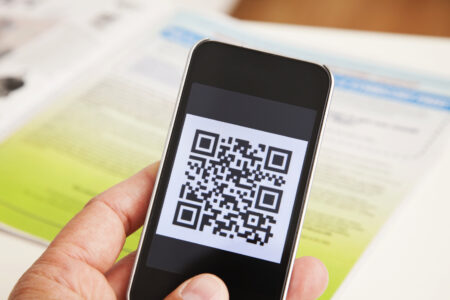
The use of QR (“Quick Response”) codes have grown by leaps and bounds over the past few years.
Designed in 1994 by a Japanese auto employee working for Denso, the QR code was designed as a better way to keep track of the company’s millions of parts. With bar codes already established in the marketplace, the QR code differs by adding data for other things, including web tracking.
The QR codes have taken off because they allow for more information, including faster reading, time-stamping and even payment links. Free QR code generators are available on many websites — anyone with a computer can create one. Sadly, criminals have been quick to subvert the use of QR codes for their own purposes.
Be aware that government agencies DO NOT send QR codes to collect unpaid parking tickets, tolls or court fines. Some Ohioans have reported receiving official-looking text messages with QR codes for payment, adorned with our state seal, court case numbers, names of actual judges and police officials, court appearance dates and case numbers.
If you scan the QR code, you are immediately delivered into a slick-looking website with detailed instructions to pay for an offense you never committed. Often, these scams will contain threatening language saying that an arrest warrant has, or will be issued if you don’t pay up NOW. Your first tip-off that it’s a scam is a message from a government agency with a QR code.
Ignore any texts from courts or law enforcement agencies telling you to send money by clicking a QR code, or paying for anything with a gift card, wire transfer or cryptocurrency. If you’re in doubt, take a few minutes to call the court or government office to verify things before swinging into action.
The Federal Trade Commission cautions that if you see a QR code in an unexpected place, take the time to inspect the linked URL (Uniform Resource Locator) to see if it seems fishy. Fake QR codes may appear with a message saying there was a problem with your package delivery and you need to give information to reschedule delivery.
Other phony QR codes have been sent out with a warning that you need to reset your password due to suspicious activity on your account.
Fraudulent ticket-sale websites have been set-up to download bogus QR codes on your smartphone, which will leave you stranded at the gate for a concert or sports event. Before buying tickets that involve a QR code, double check to make sure the website is genuine.
Fake QR codes have been found on stickers left on restaurant menus — you order and pay for your food in good faith only to discover you’ve been scammed. Crooks are also sending out old-fashioned letters in the mail with a QR code offering a discount that’s too good to be true, loan forgiveness, or demand for an overdue payment.
Don’t trust anything that shows up on your phone, computer or in your mailbox. In this day and age where scammers turn every digital advance into a criminal weapon, we’re all on our own. Once you lose your money in a scam, it’s usually gone forever. So think long and hard before sending off your money through a QR code.
Dave Long of Poland, a Youngstown State University graduate, is a retired public affairs officer with U.S. Customs and Border Protection who later worked as an Elder Scam Prevention Outreach specialist in Rochester, N.Y., before moving back to the Mahoning Valley.
Lifestyles
Senior News
PERI TO MEET: The Public Employee Retirees of Mahoning County Chapter 18 will meet at noon April 7 at Avion on the ...
To Your Good Health: Heart rate variability and its significance
DEAR DR. ROACH: My heart rate variability (HRV) on my heart rate tracker has ranged from 12-14 ms for years now. I ...
Get a QR Code from the government? Don’t scan it
Seniors can emphasize balance when they’re caregiving
Spending time with grandchildren can make seniors feel young and valued. Grandparents are often asked to step in as ...
Dear Annie: Waiting for a commitment that may never come
DEAR ANNIE: My best friend of 22 years recently started dating a man who “doesn’t believe in marriage.” ...
Hints from Heloise: Keeping pairs of socks together
DEAR HELOISE: For the past 50 years, I have kept pairs of socks together by using safety pins. I don’t know where ...