

Carrots are not just a summer vegetable
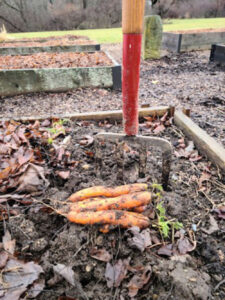
Submitted photo
On a cold winter day, nothing soothes the body like a bowl of hot chicken soup.
One of my go-to ingredients in soup is carrots, and before I can enjoy the warmth, I must experience the cold. That’s because the carrots planted last season need to be dug from the garden if they are going to find their way into the soup pot.
The root cellar is a thing of the past in most homes, so leaving carrots in the ground serves the same purpose. Carrots dug in winter have a much sweeter taste than those harvested in summer. As temperatures drop, carrot starch is converted to sugar, which acts as “antifreeze’ as it lowers the freezing point of cells. Mulching with leaves is additional protection when temperatures reach midwinter lows.
According to The Ohio State University, carrot seed can be planted after April 15 in our 6A hardiness zone.
The seeds are tiny, so purchasing pelleted seed or seed tape can make the chore easier.
They are not meant to be started in pots then transplanted since this will disrupt root growth. Seeds are sown 1/4 to 1/2 inch deep. Thin them to 2 – 4 inches apart when the foliage reaches 4 inches in height. Spacing allows for root development. Removing weeds at the same time is important.
The University of Minnesota describes the best soil for carrots as a deep sandy loam with a pH between 6 and 7. Compacted soil will produce smaller, irregular roots. The soil should have consistent moisture
(1 inch/week) as the seeds germinate and continue to grow. I mulch between the rows with newspaper and straw to prevent weeds and conserve soil moisture.
When the carrot top reaches a diameter of at least 3/4 inch, harvesting can begin. Use a spading fork to loosen from the side of the row then remove the root. Pulling without loosening can result in breakage. Soaking the soil before digging is helpful. I harvest when I need them because the low humidity of refrigerator storage takes away their crispness.
We are into seed catalog season, and the wide variety of carrots available is impressive. Colors can range from typical orange to yellow, red, purple, white and black. Many have a familiar carrot shape, some are egg-shaped, and some are heart-shaped with the catalog claiming they can weigh up to a pound each. Carrot length can range from 2 inches to 10 inches. Record breaking carrots grown in special systems can reach extreme lengths, but growing one in the garden would take more than sandy loam — maybe even an excavator!
Growing this favorite garden vegetable is easy. Check out a few catalogs, order some seeds, and get your vitamin A from fresh carrots.
For a fact sheet on growing carrots, go to:
https://milwaukee.
extension.wisc.edu/files/2016/11/CarrotsWSU.pdf
Lifestyles

Preserving your Christmas poinsettia
Bridge by Steve Becker
Nearly all the attention to the U.S. victory over Italy in the 2003 world championship was focused on the last two ...
Reflections for Martin Luther King Jr. Day
Dear Readers: Wishing you all a very happy Martin Luther King Jr. Day. Please enjoy these excerpts from one of the ...
Valley Grows calendar
Here are upcoming gardening events through the Ohio State University Extension Office. For more information and a ...
How to be responsible pet sitters
DEAR HELOISE: As a pet sitter, I read with interest the letter from Mandy, in Texas, regarding things that pet ...
Why people continue to die from pneumonia
DEAR DR. ROACH: Why do people still die of pneumonia? With all the advances that we have seen in modern medicine, ...