

All about deer antlers ahead of mating season
My husband, Bill, is a hunter. He watches the fields and wooded areas around our home every day, looking for deer.
We have a large amount of very intelligent deer, both around us and at his hunting spot. We depend on venison for food. But, as all hunters know, there is THE buck! It is all about the antlers.
The cycle of antler growth is amazing. It begins in early spring either after the old antlers are shed, or the button on a yearling. The antler is anchored to the skull for stability. This button is covered with coarse hairs protecting a shiny covering called velvet. Under this velvet are other protective layers, then a layer of spongy bone that mineralizes the tissue into hard bone.
The velvet is an oxygen-rich blood supply to feed this fast-growing tissue. Antlers can grow up to two inches a week and they are the fastest-growing bone in the world.
As the spongy bone hardens, the velvet sheds as the buck rubs it off onto bushes or other vegetation. Many bucks will
eat the velvet as it is a rich protein source to begin the rut.
This cycle is triggered by a combination of increased daylight hours, as well as the rise in testosterone levels. Nutrition builds these antlers, so the better the food, the bigger and more hardy the antlers. The buck may take calcium from his own body, lowering his bone density, if needed proteins are not available.
In the rut (starting in October), bucks become single-minded, thinking about mating.
They scrape and rub their scent, urinate to mark their territories and let all know they are ready to defend their right to mate.
Deer rattling is a social behavior to draw out other bucks. They spar for dominance, and there are accounts of deer locking antlers and dying together.
During the rut, the buck can lose up to 20% of his body mass, as all their focus and energy is on mating. They lose their antlers starting in January which is a loss of 3 to 9 pounds, due to decreased daylight hours and lower testosterone levels that weaken the connection between the antler and the skull.
These sheds are an important source of minerals for rodents, for ingesting and chewing to grind down their teeth.
The fallacy that you can tell the age of a deer by his antlers is not true. You can only tell the fitness of the deer, and the largest antlers in the deer’s prime are 4 to 6 years old.
To learn more, go to http://go.osu.edu/antlers.
Hughes is an Ohio State University Extension Master Gardener Volunteer in Mahoning County.
Lifestyles
Dear Annie: She’s hoping to heal a hurting blended family
DEAR ANNIE: I’ve been married for 35 years and have four children and seven grandchildren. We are a blended ...
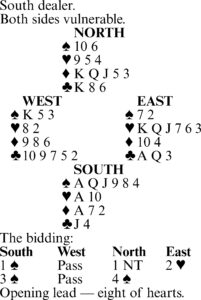
Bridge by Steve Becker
Hints from Heloise: Language change is a constant
DEAR HELOISE: King Alfred the Great would never have said “you” to one person, since this was the plural form, ...
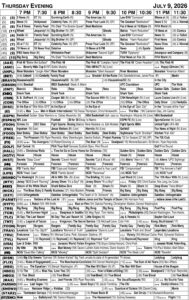
Thursday evening TV
Great wine TV to pair with hot evenings
The weather outside is driving many of us into the air conditioning. Is it time for a summer movie night in the ...
A quiet house after a busy week
It’s a hot and humid week with the temperatures hovering close to the 100-degree mark by midday. It doesn’t ...