

Is it torpor or hibernation?
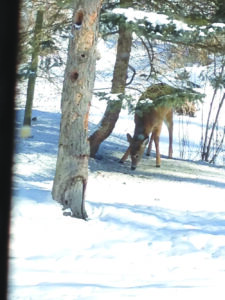
While many mammals hibernate or go into a state of torpor during the winter, the deer like these one at a ground feeding area can be found roaming around all season. Other active animals during winter include rabbits, opossums, fox and coyote. (Submitted photo / Ohio Department of Natural Resources)
Leaves have dropped to the forest floor and most of us have raked them into our garden areas where they will protect our plants and feed the soil. The stimuli of shorter days and colder temperatures cause us to prepare for the cold months ahead. Mammals, amphibians, and insects also prepare to survive our freezing weather.
Hibernation is one way some mammals get through these months. Most mammals are not complete hibernators but enter a state of torpor in which their metabolism, heart rate, breathing and digestion significantly slows to a minimum; therefore, fat storage and high caloric food consumed in autumn determines the success of their survival. True hibernators cannot be awakened but remain asleep until warmer temperatures stimulate them. Most mammals enter torpor in which they have added fat reserves to their diet, sleep on the coldest days and emerge on warmer sunny days to forage for food.
Considering the mammals with which we are most familiar in our area, the squirrels, chipmunks and mice will enter torpor but must awaken periodically, scampering around finding nuts and berries, taking some back to their nest or burrow to stash for a later meal. These partial hibernators often find a popular place under our bird feeders, discovering seed that has dropped to the ground.
Bats usually spend winter in caves hibernating. It is especially important that they not be disturbed as their fat reserves become depleted quickly and starvation could result if they awaken too soon.
Many of our birds head south for winter, but many also remain finding enough food to survive. Chickadees, cardinals, blue jays, titmice, dark-eyed juncos and crows don’t seem to mind our colder temperatures. Owls remain unseen but if you are in the woods, you might be lucky to spot one peeking from a tree hole where they keep warm.
Other mammals found roaming around during winter are deer, rabbits, opossums, fox and coyote as they can find food year round, although their source of food is scarce.
Cold-blooded reptiles rely on outside temperatures to maintain body heat. Snakes hibernate in dens that are far below the frost line at a subterranean level, which is warmer than the surface temperature. Turtles will hibernate near or under the mud of lakes or ponds, slowing their breathing and, if needed, will maintain oxygen through cutaneous respiration — breathing through their skin.
Most interestingly are amphibians that are “freeze tolerant.” An example is the wood frog. Burying itself under leaf litter, their extracellular fluid becomes ice and its heartbeat, blood flow and brain activity is stopped. As freezing begins, an “antifreeze” substance protects the tissues from damage and the frog will survive, breeding once again in early spring!
This is a very brief overview of how animals cope during winter. For more information, visit http://go.osu.edu/animalsinwinter.
Kane Shipka is a Master Gardener Volunteer for The Ohio State University Extension in Mahoning County.
Lifestyles

Vatican signals openness but limitations in outreach to LGBTQ+ Catholics
St. Rose School hosts Police Appreciation Day
GIRARD — St. Rose Catholic School hosted its first-ever Police Appreciation Day May 10 by welcoming local law ...
Religion news
136 YEARS: First Baptist Church of Niles will celebrate 136 years at 10:45 a.m. Sunday with a special worship ...
Men’s Rally in Valley set for May 23
YOUNGSTOWN — The 2026 Men's Rally in the Valley will be 8 a.m. to 3 p.m. May 23 at the Covelli Centre. The free ...
Senior News
Senior news RETIREES TO MEET: St. Joseph Warren Hospital Retirees will have their monthly meeting at an 11 a.m. ...
Did heartburn medicine cause weak bones?
When a health care provider prescribes a medicine to you, they are usually focused on just the one condition for ...