
Spring peepers to burst in to song
Trending
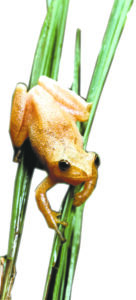
Spring has arrived and with it will bring our smallest native frog, the spring peeper (Pseudacris crucifer). For me, this is the true harbinger of spring.
Found in swamps, ponds and wetlands near wooded areas, the males' call to the female can be a deafening high-pitched peep, usually on warm, humid spring evenings that can last April through July, with the loudest calls during May. On hearing their chorus, many think they are hearing insects, but insects do not become our evening sounds until much warmer summer weather appears.
The Latin term of the spring peeper, Pseudacris crucifer, is translated from "pseudis" (false) and "akris" (cricket). "Crux" (cross) and "fer" (bear) also describes the spring peepers' imperfect, yet distinctive "X" on its back, with colors ranging from light to dark brown on this 1 inch-1 1/2-inch length frog.
During breeding, the male's distinctive call originates from a balloon-like sac below his chin. Although males are smaller than females, their song is amazingly loud as they gather in large groups to impress females.
Spring peeper males are 3 years or older before breeding occurs. The faster and louder male is the older, larger one and they have an advantage over younger, smaller frogs.
After the female accepts the male, they find a suitable place in a pond or wetland area where the female deposits 800 to 1,000 eggs on vegetation. After six to 12 days, the eggs hatch into tadpoles, and remain there for two to four months feasting on plants, algae, fungi and anything they can find, while attempting to escape becoming food for other pond animals.
If you are lucky enough to watch their metamorphosis, you will notice the tadpole's hindlimbs begin to appear, then forelimbs as the tail disappears. Jaws, teeth, eyelids and mucous glands with a hard bony skeleton finally become an adult frog.
It is illegal to keep tadpoles and frogs unless you are an educator or scientist with a permit.
Winter does not present a problem for the spring peeper as they find cover in rotting logs, under rocks and under piles of leaf litter. They, and other frogs, never completely freeze, but remain alive by producing glucose from their livers, and sustain themselves through sub-freezing temperatures as their heart rate slows considerably.
Emergence in spring is weather dependent, at which time they search for other frogs and once again, begin the chorus.
This is an example of only one reason to maintain our forests, ponds, wetlands and swamps. It is an added example of why we should provide winter homes by raking our leaves around our plants, leaving them during the winter months rather than bagging them, providing a home for amphibians, reptiles and insects during our coldest months.
Preservation is vitally important and maintaining healthy natural areas both in our yards and forested areas benefit all with both education and enjoyment of nature.
When you hear the spring peepers, you will soon expect the coming summer evenings providing us with a chorus of serenades.
To learn more about spring peepers, go to http://go.osu.edu/springpeeper.
For color photo field guides of amphibians and more from the Ohio Department of Natural Resources, go to http://go.osu.edu/fieldguides.